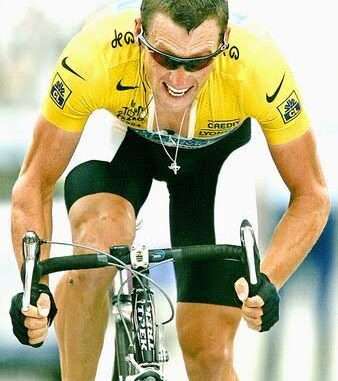
On July 21, 2004, cycling fans worldwide held their breath as Lance Armstrong embarked on one of the most electrifying solo rides in Tour de France history—15.5 kilometres of raw, unfiltered mountain agony up the iconic Alpe d’Huez. Known for its 21 torturous hairpin bends and punishing gradients averaging 8.1%, this mythical Alpine climb has broken the spirits of many and crowned legends of a few. On this day, Armstrong etched his name deeper into the annals of cycling lore, conquering the mountain in just 39 minutes and 41 seconds during the 16th stage time trial.
What made this ride unforgettable was not merely the stopwatch-defying time, but the context, preparation, psychological warfare, and sheer grit that Armstrong poured into every pedal stroke. This was not just a ride. It was a masterclass—an athletic symphony conducted in the thin, oxygen-starved air of the French Alps.
The Build-Up: A Time Trial Unlike Any Other
The 2004 Tour de France was already shaping up to be a gruelling affair. Armstrong was chasing his sixth consecutive Tour title, a feat no rider had ever accomplished. Every stage was a chess match, and by the time the peloton arrived at Bourg d’Oisans, the base of Alpe d’Huez, fatigue had already etched itself into the riders’ faces.
But Stage 16 was no ordinary day. For the first time in Tour history, organisers placed a time trial on the Alpe d’Huez climb. This meant riders would be sent off one by one, racing not against the pack but against the clock—and the mountain itself. The stakes were massive. No slipstreaming, no tactical drafting—just man versus nature, with every weakness magnified under the unforgiving gaze of the thousands of fans lined the mountainside.
Armstrong’s Preparation: Science, Obsession, and Detail
Armstrong’s preparation for the Alpe d’Huez time trial was meticulous, obsessive even. According to then-Discovery Channel team manager Johan Bruyneel, Armstrong had reconnoitred the climb several times, memorising every bend, calculating pacing strategies, and even studying wind patterns at different altitudes on the slope.
“We treated it like a laboratory experiment,” said Chris Carmichael, Armstrong’s longtime coach. “Lance knew every gear shift before he even got on the bike that day.”
The American cyclist was also supported by the most advanced cycling technology available at the time. His Trek time trial bike was fitted with aerodynamic modifications, lightweight materials, and advanced power meters that allowed his team to monitor output down to the last watt. But machines alone don’t conquer mountains—it took a human engine with a ruthless drive for domination to make it all sing.
Psychological Warfare: Mind Games in the Mountains
Armstrong didn’t just race for himself—he raced to dismantle his opponents mentally. The time trial start list had him departing just after his biggest rival, Jan Ullrich, the German powerhouse who was expected to challenge for the yellow jersey.
As Armstrong lined up at the start house, the atmosphere crackled with tension. Booed by sections of the crowd due to ongoing controversies surrounding his dominance and personality, Armstrong channelled the noise into laser-focused aggression.
In an iconic moment captured by cameras, Armstrong glared down the mountain toward Ullrich and uttered a phrase that would later become symbolic of the moment: “I’m going to bury him.”
What followed wasn’t just athletic excellence—it was a psychological demolition. Armstrong maintained a searing pace from the first kilometre, quickly making up the 1-minute start difference to catch and pass Ullrich mid-climb. Passing your rival in a time trial is rare—on Alpe d’Huez, it was unheard of. The message was clear: this was Armstrong’s mountain today.
The Climb: 15.5 Kilometres of Pure Suffering
From the starting gate in Bourg d’Oisans to the summit of Alpe d’Huez at 1,850 meters above sea level, every second of the ride was an exercise in controlled agony. Armstrong’s cadence was relentless—hovering around 90 revolutions per minute, even on the steepest gradients. His heart rate never dipped below the red zone, but he never once looked like cracking.
Each of the 21 hairpin turns bore the name of a previous Alpe d’Huez stage winner, a Hall of Fame etched into the asphalt. As Armstrong powered through them, he seemed determined to ensure his own name would not be forgotten among the legends.
Fans swarmed the roadside, at times narrowing the path to a claustrophobic corridor of sound and chaos. Unlike most time trials, which can feel eerily silent, this climb reverberated with cowbells, horns, and chants, often inches from the riders’ faces. Armstrong cut through it all, expression locked in grim determination.
Crossing the Line: History Sealed in 39:41
As Armstrong surged over the final incline and sprinted the last few meters to the finish line, he stopped the clock at 39 minutes and 41 seconds—a time that would go down as one of the fastest ever recorded on the climb. It wasn’t the absolute record (that belonged to Marco Pantani, under arguably different circumstances), but it was unmatched in the context of a time trial.
More importantly, it widened Armstrong’s lead in the General Classification and effectively crushed any lingering hopes of a comeback from his rivals. The sixth Tour de France title was now within arm’s reach.
As he dismounted his bike, his face etched with exhaustion but not surprise, Armstrong didn’t raise his arms in celebration. There was no theatrical flourish. Just a silent, searing confirmation that he had delivered exactly the performance he knew he could.
Legacy and Controversy: A Ride Cast in Shadow
In the years that followed, Armstrong’s legacy would be mired in controversy. His titles were stripped after a lengthy doping investigation concluded he had used performance-enhancing drugs throughout his career. The Alpe d’Huez time trial, like many of his achievements, now lives in a strange dual reality: one of undeniable athletic brilliance and one of moral and ethical ambiguity.
Yet even critics admit—doping or not—what Armstrong did that day took supreme skill, mental fortitude, and physical punishment that few athletes can endure. The climb didn’t become easier with drugs; it remained a merciless challenge, and Armstrong still had to deliver under extraordinary pressure.
The Alpe d’Huez Mythos Lives On
More than two decades later, the 2004 Alpe d’Huez time trial remains a benchmark in cycling history. It was a moment where preparation met opportunity, where fearlessness overcame fatigue, and where an athlete—flawed as he may have been—showed the world what human endurance could look like under the harshest spotlight.
Today, cyclists still study that ride. Coaches replay the footage. Fans remember where they were when Armstrong surged past Ullrich on that mountain. And the mountain? It remembers too.
Alpe d’Huez doesn’t grant glory easily. It demands everything. On that summer day in 2004, Lance Armstrong gave everything—and for 39 minutes and 41 seconds, the mountain bowed.
Leave a Reply