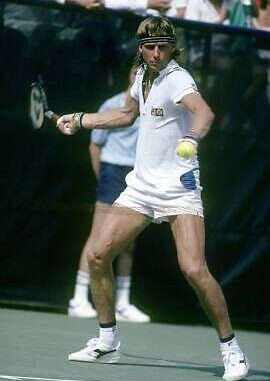
Björn Borg. Just the name brings to mind icy composure, clutch performances on the biggest stages, and a level of dominance that seemed other-worldly. He was the Wimbledon machine. The French clay conqueror. The man with a calm façade who rarely cracked under pressure. But what too many saw was the legend. What few saw, until now, was the man behind the trophy pedestal and what happened when it all stopped.
In his newly released memoir Heartbeats, Borg, now 69, opens up like never before about the pain, the confusion, and the self-destructive spiral that consumed his life after retiring from professional tennis in the early 1980s. For decades, he has been known almost exclusively for what he achieved on court. Now, at long last, he’s revealed what he suffered off it. What follows is an account of that descent—and a map of the recovery and reflection that followed.
Early Exit, Early Void
At age 25, Borg shocked the sports world when he stepped away from tennis. Having accumulated 11 Grand Slam titles, including six French Opens and five consecutive Wimbledons, many assumed he’d go on for years. Yet, after losing the Wimbledon and U.S. Open finals in 1981 to his rival John McEnroe, Borg says he realized something more troubling than defeat: “All I could think was how miserable my life had become.”
Retirement, for many, is relief. For Borg, it opened up a chasm. The routines, the purpose, the structure—all dissipated. He had no plan for what came next. He didn’t have people guiding him. He was lost.
A Rush Like No Other
Almost immediately, Borg started to look for something to fill the void. In 1982, just a year after retiring, he tried cocaine for the first time. Borg recalls that he got “the same kind of rush I used to get from tennis.” That feeling—familiar, energizing, yet dangerous—was seductive. It hooked him. Drugs, pills, alcohol—they became his escape.
This wasn’t about casual experimentation. It was about self-medication. Panic attacks followed. The loneliness and lack of direction intensified. Borg writes about giving himself over to substances that made the reality easier to ignore. “You don’t have to think about your problems,” he said. “I knew that I was not happy.”
Hitting Rock Bottom: Overdoses & Collapses
The descent didn’t stop with mood swings and numbing routines. It escalated, leading to multiple hospitalisations. One overdose in the Netherlands during an exhibition tournament nearly cost him his life. Another in Italy in 1989 was so severe that his wife at the time, singer Loredana Bertè, couldn’t revive him at first.
One of the moments that affected him most deeply was waking up in a hospital bed, looking up at his father. That moment, Borg says, filled him with shame—more than anything else. It was the stark contrast: the public icon, the champion, reduced by his own decisions to someone unrecognizable.
The Shame, the Reflection, the Turning Point
Borg doesn’t paint himself as a victim. He describes many of his decisions as “stupid.” He regrets how substances destroyed parts of him—his relationships, his business, his peace.
One crucial moment came in 1989: Borg says, “I need to do something.” He realized that continuing down this path would mean the end of more than just his career—it might mean the end of his life. From that point, things began to shift. He slowly started to get back control, seeking what stability he could, attempting to rebuild.
Love, Family, and Finding the Joy Again
Recovery, however, was not instant. It was years of trial and error, of relapse, of pushing through guilt. Borg’s personal life bore the scars. Turbulent relationships, failed business ventures, and a sense of missing purpose haunted him. Yet several things pulled him back: a sense of shame that led to accountability; the love of his partners, especially in later years; reconnecting in small ways with what sport meant to him—for joy, for challenge, for identity.
Ultimately, the process of revealing this story in his memoir Heartbeats has itself been cathartic. Borg describes a relief in shedding secrets. In speaking openly, he’s given voice to years of pain, but also hope. He’s turned a corner.
The Present: A New Chapter
Today, Borg is no longer defined just by the trophies, or the rivalries. He is defined also by what he endured and how he found a way forward. He’s been clean for many years, he says. He’s reconciled with the past. And while he’s had to face new challenges—among them a diagnosis of aggressive prostate cancer in 2023 and surgery in 2024—his current state is one of reflection, gratitude, and renewed purpose.
What We Can Learn
Borg’s story is raw, unsettling, but critically important. For athletes, it shows how success on the field (or court) doesn’t immunize one from pain or loss. For anyone who has ever felt lost, it shows that admitting the darkness is the first step to finding light. And for all of us, it’s a reminder that the real battle is often behind closed doors.
Some lessons:
- Avoid defining your identity by one role. When retirement came, Borg struggled because almost everything in his life had been sport. When that anchor dropped, everything else floated—or sank.
- The danger of no structure, no plan. Purpose and routine are more than mundane; they’re the scaffolding of mental health, especially after seismic life changes.
- The pull of substance as escape. It doesn’t have to begin with addiction. Often, it begins with just wanting to numb the discomfort. That path can get darker very fast.
- The power of vulnerability. Borg’s contribution now may be bigger than his greatest match win: his honesty.
Conclusion: More Than the Legend
Björn Borg was always more than a tennis player. He was a symbol of focus, discipline, ice-cold resolve. But what this new chapter reveals is that behind the legend was a man who suffered, who made mistakes, who lost his way—and who, ultimately, found his footing again.
Today, as he writes his memoir Heartbeats, he doesn’t just recount victories and defeats on court; he gives us a lesson in survival, in owning your story, no matter how painful. He teaches us that it’s possible to walk through darkness and emerge, not unscathed but whole again.
—
If you’ve found hope, pain, or inspiration in Borg’s journey, you’re not alone. Sharing stories like his isn’t just catharsis—it’s courage.
Leave a Reply