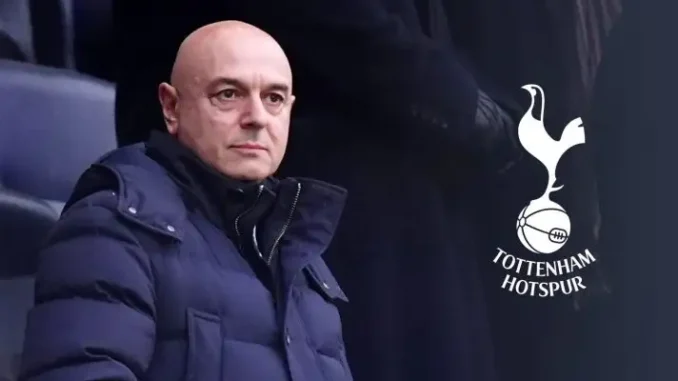
On September 4, 2025, Tottenham Hotspur announced the end of an era. Daniel Levy, the long-serving chairman who steered the club for nearly 25 years, stepped down from his role, leaving behind a legacy marked by both monumental achievements and lingering frustrations. His departure signals more than just a change in leadership—it represents a turning point in the club’s quest for long-term sporting success.
For many Spurs fans, Levy’s exit feels like the closing of a chapter that defined modern Tottenham. For others, it’s the long-awaited fresh start they believe is necessary for the club to finally match its off-pitch brilliance with on-pitch glory. But what does Levy’s resignation really mean for Tottenham Hotspur? And how will this leadership transition shape the club’s future?
The Levy Era: Transformation with Caveats
Daniel Levy became Tottenham chairman in 2001, and during his nearly quarter-century tenure, he oversaw the most transformative period in the club’s history. Spurs evolved from a club known more for its tradition than its competitiveness into a global football brand with state-of-the-art facilities and financial muscle.
Key achievements under Levy include:
- The construction of the Tottenham Hotspur Stadium, widely regarded as one of the finest multi-use stadiums in world football.
- The development of a world-class training ground in Enfield, placing Spurs among Europe’s elite in terms of infrastructure.
- Regular appearances in European competitions, including the unforgettable run to the 2019 Champions League final.
- The establishment of Tottenham as a financially stable and commercially powerful club, competing with the Premier League’s traditional giants.
Yet, despite these monumental strides, Spurs’ trophy cabinet remained painfully sparse. In 25 years, Levy’s leadership delivered just two trophies—the League Cup in 2008 and the same competition again in 2021. For a club of Tottenham’s stature and ambition, this imbalance between infrastructure success and silverware left a lasting sense of frustration among supporters.
Levy’s business acumen was never in doubt, but his perceived cautiousness in the transfer market, managerial appointments that often felt like mismatched gambles, and the absence of consistent silverware tarnished his relationship with the fanbase.
Why Now? The Timing of Levy’s Departure
The announcement of Levy’s resignation came at a moment of cautious optimism for Spurs. The team sits fourth in the Premier League after three matches of the 2025/26 season, fresh off a Europa League triumph and under the guidance of a newly appointed head coach.
The timing reflects both internal and external pressures:
- Ownership Ambition: The Lewis family, long-time owners of the club, have made it clear they want to see Tottenham compete consistently for major trophies, not just balance the books.
- Supporter Pressure: Growing unrest among fans, frustrated by near misses and lack of tangible success, added weight to the argument for change.
- Governance Restructure: The separation of the chairman and CEO roles points to a broader push for better corporate governance and a modern leadership structure.
Put simply, the stage was set for a leadership reset, with Levy stepping aside to allow new voices and ideas to shape Spurs’ future trajectory.
Enter Peter Charrington and Vinai Venkatesham
Levy’s responsibilities as chairman now pass to Peter Charrington, who takes over as the new non-executive chairman. Meanwhile, Vinai Venkatesham, appointed CEO earlier in 2025, continues to play a central role in the day-to-day running of the club.
This separation of responsibilities is significant. Under Levy, the chairman often served as the ultimate authority in both business and footballing matters. By contrast, the new structure mirrors models seen at other successful European clubs, where governance is more streamlined and specialist expertise drives decision-making.
- Charrington’s Role: As non-executive chairman, Charrington will focus more on oversight, accountability, and strategic alignment rather than micromanaging footballing operations.
- Venkatesham’s Role: The former Arsenal executive brings Premier League experience and a track record of commercial success. His job is to modernize Spurs’ operations and ensure the club delivers on its sporting and financial ambitions simultaneously.
Crucially, the Lewis family remains the club’s owners, and no changes have been made to the shareholder structure. That stability provides continuity while still allowing for fresh leadership at the top.
A Club Poised for Renewal
Tottenham’s immediate future is one of cautious optimism. On the pitch, the club has momentum: a recent European triumph, a competitive start to the domestic season, and a head coach tasked with building on a foundation that feels stronger than in years past. Off the pitch, the leadership shake-up suggests a newfound willingness to address past shortcomings and embrace modern governance.
But challenges remain:
- Delivering Trophies: Infrastructure and financial stability are vital, but silverware is what defines a football club’s greatness. Fans will be watching closely to see whether this new leadership setup translates into genuine success on the pitch.
- Sustaining Player Development: Spurs have long prided themselves on nurturing talent—from Harry Kane to Son Heung-min. Ensuring the pipeline of youth and global talent remains strong will be crucial.
- Managing Expectations: After years of frustration, supporters demand progress but are wary of false dawns. The new leadership must balance ambition with patience to avoid repeating old cycles of boom and bust.
Daniel Levy’s Legacy
It would be unfair to summarize Daniel Levy’s legacy in simplistic terms. He was neither a resounding success nor a complete failure. Instead, his reign can be described as a paradox: a golden era in terms of infrastructure and financial growth but a period of missed opportunities in terms of footballing glory.
Levy himself acknowledged this bittersweet reality in his parting statement, expressing pride in what the club achieved while thanking supporters and promising to remain a passionate fan. For all the criticism, Levy’s love for Tottenham was never in doubt—and his fingerprints will remain on the club’s modern identity for decades to come.
What This Means for Spurs Fans
For the Tottenham faithful, Levy’s departure brings both relief and uncertainty. Relief because a new era brings hope; uncertainty because it remains to be seen whether the new leadership structure will finally deliver what fans crave most: trophies.
Supporters are right to feel cautious optimism. The ingredients for success are in place: a world-class stadium, elite facilities, financial stability, and a squad with both experience and emerging talent. But football is a results-driven business, and the ultimate measure of this transition will be silverware.
Looking Ahead
Daniel Levy stepping down is not just a leadership change—it’s a symbolic reset. Tottenham Hotspur now has an opportunity to define its future on its own terms, learning from the past while embracing new ideas and leadership models.
The next few years will determine whether Spurs can turn their infrastructure dominance into genuine footballing supremacy. With Peter Charrington overseeing governance, Vinai Venkatesham driving operations, and a talented squad eager to compete, the potential is undeniable.
For Tottenham, the post-Levy era is not about forgetting the past—it’s about building on it. The question that remains is simple: can Spurs finally turn promise into trophies?
Leave a Reply