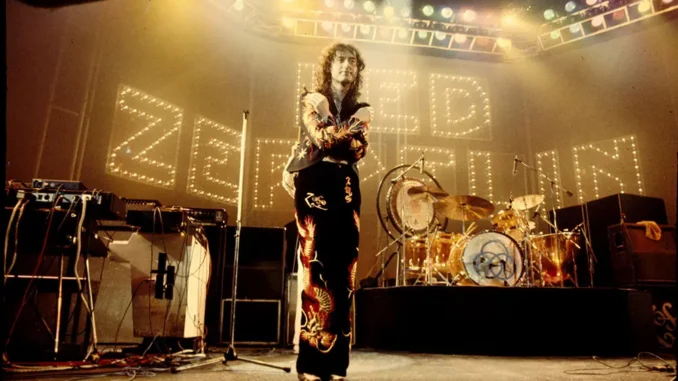
In popular music, massive success almost always sparks imitation. Elvis’ rise led to Fabian and countless rock ’n’ roll hopefuls. The Beatles inspired waves of British Invasion acts (some authentic, some manufactured). Nirvana’s breakthrough gave us Silverchair and a flood of grunge copycats. And when it comes to Led Zeppelin, most point to the ’80s as the heyday of “Led Clones.” But truthfully, the imitation game began much earlier—back in the ’70s, when Zeppelin’s sound was still fresh and dominating radio.
That story—and the long shadow Zeppelin cast across decades—is the subject of my 2024 book, Led Clones: The Led Zeppelin Imitator Craze of the 80s…and Beyond. But let’s zoom in on the ’70s, a decade that gave us Star Wars, punk, afros, bell-bottoms—and a wave of Canadian bands clearly feeling the Zeppelin pull.
Rush: Canada’s First Great “Zep Moment”
By the early ’70s, Zeppelin were the biggest rock band on Earth. Naturally, the first crop of imitators followed fast. At the top of that list? Rush. Their 1974 self-titled debut is drenched in Zeppelin influence—Geddy Lee’s Robert Plant–style wails on Finding My Way, Alex Lifeson’s Page-like riffs on Working Man. Unlike some bands who claimed “shared influences” to dodge comparisons, Rush were refreshingly honest. Lee has openly acknowledged Zeppelin’s impact, including in his 2023 memoir My Effin’ Life.
Still, not every Zep-flavored track came straight from Page and Plant. Lifeson has said that Working Man was actually inspired by Cream: “It became one of our longer jam songs and an opportunity to stretch out and exhaust our teenage fingers.”
Of course, Rush would go on to forge a wholly original path, peaking with back-to-back classics Permanent Waves (1980) and Moving Pictures (1981). But their Zeppelin roots were undeniable.
Heart: Seattle Meets Vancouver, with a Zeppelin Twist
While often considered a Seattle band, Heart’s early years were spent in Vancouver—just in time for their 1975 debut Dreamboat Annie, which delivered hits like Magic Man and Crazy on You. At first, Heart weren’t obvious Zeppelin disciples. But one song made the connection crystal clear: Barracuda (1977). Its riff and groove echoed Zeppelin’s Achilles Last Stand, cementing the Wilson sisters’ place in the Zep-inspired lineage.
Triumph: A Bar Band with Zeppelin in Their DNA
Another Canadian trio, Triumph, also wore their Zeppelin love proudly. Guitarist Rik Emmett recalls obsessing over Black Dog: “Everybody played it wrong back then—we didn’t know how to count it. But to model ourselves after Zeppelin was what got us in the door.”
Early Triumph albums, especially their 1976 debut, are packed with Zeppelin-style riff rock—Be My Lover, Easy Life. And in their bar-band days, they even played two sets of Zeppelin a night.
Moxy: The Obscure Contender
One of the lesser-known Canadian Zep disciples was Moxy. Their 1975 debut (featuring session guitarist Tommy Bolin) carried heavy Zeppelin vibes on tracks like Can’t You See I’m a Star, Still I Wonder, and especially Train. Guitarist Earl Johnson later admitted that producer clashes over his Page-inspired solos led to Bolin stepping in. The experience, Johnson said, ultimately made him a better player—and Moxy went on to build a cult following.
Why Canada Was So Susceptible
So why did Canadian bands in particular gravitate toward Zeppelin’s sound? Rik Emmett offers some insight: Zeppelin’s rapid-fire early discography (four albums in three years) hit Canadian musicians hard, at the same time as other British heavyweights like Cream, Hendrix, and Jeff Beck. Add prog rock—Yes, Genesis, Pink Floyd—into the mix, and you have a uniquely fertile Canadian rock scene.
There were also practical reasons: Canada’s vast touring distances favored lean, loud power trios. Zeppelin, Cream, and Hendrix proved you could make massive noise with just three instruments and a van full of amps.
As Emmett put it: “The least amount of mouths to feed, and the most amount of noise you could make.”
Leave a Reply