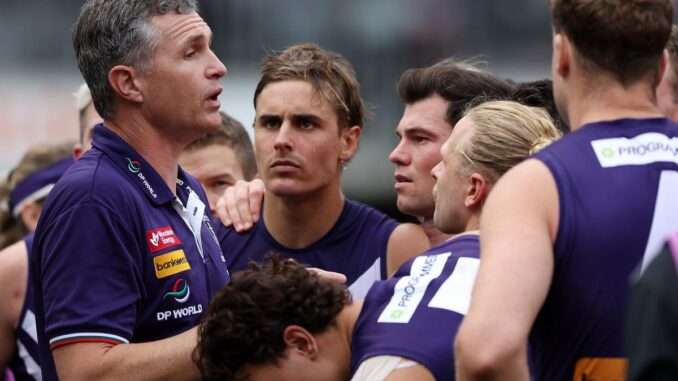
In a match that epitomized the highs and lows of Australian Rules Football, Fremantle Dockers’ coach Justin Longmuir expressed profound disappointment following his team’s Round 9 draw against Collingwood. Despite a spirited comeback to level the scores at 75-all, Longmuir’s post-match reflections centered on the team’s inefficiencies and lack of cohesion, which he believes are symptomatic of deeper issues plaguing the Dockers this season.
A Tale of Two Halves
The Dockers found themselves trailing by 25 points with just over seven minutes remaining. A late surge, highlighted by Jeremy Sharp’s goal with 44 seconds left, salvaged a draw from the jaws of defeat. While the comeback showcased the team’s resilience, Longmuir was quick to point out that such heroics should not overshadow the underlying problems.
“I’m proud of the way we fought the game out,” Longmuir acknowledged. “Being 25 points down, we could have found it too hard, but the players found something, which I’m proud of.”
Inefficiency and Disconnection
Longmuir’s primary concern was the team’s inefficiency, particularly in capitalizing on scoring opportunities. The Dockers’ inability to convert dominance into scoreboard pressure has been a recurring theme this season. In previous matches, such as the loss to Carlton, Fremantle dominated hitouts but failed to translate that advantage into clearances and contested possessions.
“Inefficiency costs us our current predicaments. Very disappointing,” Longmuir stated bluntly. “We got beaten up around the contest and went away from any resemblance of a connected brand.”
The coach emphasized that during critical moments, players tended to internalize and focus on individual battles rather than maintaining a cohesive team approach. This disconnection was evident in the third quarter against Carlton, where the Dockers conceded six unanswered goals.
The Mental Game
Longmuir also highlighted the psychological aspect of the game, noting that the team’s struggles are not solely physical or tactical but also mental. He urged his players to avoid self-pity and instead focus on collective improvement.
“Don’t wallow in your self-pity,” he advised. “We’re all disappointed, but we’ve got six days leading up to a great challenge. We need to get around each other, help each other to get better, and bounce back.”
Looking Ahead
With the season progressing, the Dockers find themselves at a crossroads. The team’s inconsistency and inability to maintain pressure throughout matches have raised questions about their finals aspirations. Longmuir acknowledged that the team needs to address these issues promptly to remain competitive
“We need to fix slow starts,” Longmuir admitted, referencing the team’s 0-5 record in first quarters earlier in the season. “We’ve tried to trigger that internally for a while now.”
The coach also pointed out that the team must improve its delivery inside the forward 50. Despite having a young forward line, the Dockers have struggled to make the right decisions when entering the attacking zone. “Good teams finish their work off. That’s something we can practice,” Longmuir noted.
While the draw against Collingwood showcased Fremantle’s fighting spirit, it also highlighted persistent issues that need urgent attention. Longmuir’s candid assessment underscores the importance of addressing inefficiencies, fostering team cohesion, and maintaining mental fortitude. As the Dockers prepare for upcoming challenges, their ability to learn from these experiences will be crucial in determining their trajectory for the remainder of the season.
Leave a Reply