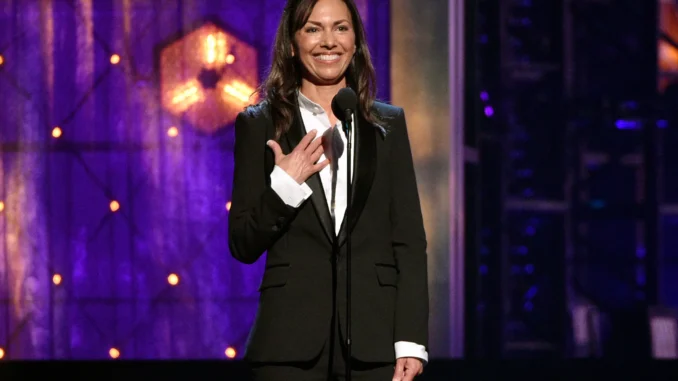
She gave us “Walk Like an Egyptian” in the 80s. Now, at 66, Susanna Hoffs is proving that creative evolution never stops—and her latest chapter might be her most fascinating yet.
Most artists peak in their twenties or thirties, then spend decades chasing that early lightning in a bottle. Susanna Hoffs is doing something far more interesting: she’s becoming a completely different kind of artist altogether.
While her former Bangles bandmates have largely stepped away from the spotlight, Hoffs is experiencing what can only be described as a creative renaissance that spans multiple art forms. She’s not just making music anymore—she’s crafting novels, unearthing lost albums from her garage, and preparing for a world tour that promises to recontextualize her entire catalog.
The Lost Record: A 25-Year Mystery Solved
The most intriguing piece of this puzzle is “The Lost Record,” an album Hoffs recorded in her garage in 1999 but only released in 2024. Think about that timeline for a moment—a quarter-century gap between creation and release. What kind of artist sits on finished work for 25 years?
The answer reveals something profound about Hoffs’ relationship with her art. This wasn’t procrastination or perfectionism; it was an artist waiting for the right moment to share something deeply personal. The garage recordings capture a different Hoffs—more introspective, less polished, but arguably more authentic than anything she’d released during the Bangles’ commercial peak.
“The Lost Record” functions almost like a musical time capsule, offering fans a glimpse into her creative process during a transitional period when she was stepping away from the Bangles’ mega-success to find her own voice. The lo-fi production quality, rather than being a limitation, becomes part of the charm—these songs feel like secrets being whispered directly to the listener.
From Pop Star to Novelist: The Unexpected Plot Twist
Perhaps even more surprising than the lost album is Hoffs’ emergence as a novelist. Her book “This Bird Has Flown” represents a complete departure from music, yet somehow feels like a natural extension of her storytelling abilities.
The transition from musician to novelist isn’t unprecedented—think Patti Smith or Nick Cave—but it’s rare to see someone make this leap so successfully later in their career. Most musicians who try their hand at fiction produce thinly veiled autobiographies or indulgent stream-of-consciousness experiments. Hoffs has crafted something more substantial: a fully realized narrative that stands on its own literary merit.
What’s particularly fascinating is how her musical sensibilities inform her prose. The rhythm and cadence of her writing often mirror the melodic structures that made Bangles songs so memorable. She understands how to build emotional crescendos and knows when to pull back for maximum impact—skills that translate remarkably well from songwriting to novel writing.
The 2025 World Tour: Recontextualizing a Legacy
Hoffs has announced a 2025 world tour, but this isn’t your typical nostalgia circuit. At 66, she’s not content to simply perform the greatest hits for audiences stuck in 1987. Instead, she’s using the tour as a platform to present her entire artistic evolution—from Bangles classics to solo work to material from “The Lost Record.”
This approach is risky. Audiences attending a Susanna Hoffs concert expect to hear “Manic Monday” and “Eternal Flame.” They might not be prepared for deeper cuts or garage recordings. But Hoffs seems less interested in giving audiences what they expect and more focused on showing them who she’s become.
The tour represents a bold statement: she refuses to be trapped by her past successes. Each performance becomes a conversation between her various artistic selves—the pop star of the 80s, the solo artist of the 90s and 2000s, the garage recording experimenter of 1999, and the novelist of today.
“Meanwhile”: The Album That Could Change Everything
Her upcoming solo album “Meanwhile” is set for release on March 15, 2025, and early indications suggest this could be her most cohesive artistic statement yet. The title itself is telling—”Meanwhile” implies something happening parallel to the main narrative, suggesting these songs exist in conversation with her better-known work.
What makes this album particularly intriguing is its timing. Rather than rushing to capitalize on any renewed interest generated by “The Lost Record,” Hoffs is taking a measured approach. “Meanwhile” arrives after she’s had time to process the response to her garage recordings and integrate those lessons into new material.
The album also benefits from her experience as a novelist. Writing fiction requires a different kind of discipline and attention to narrative structure than songwriting. The skills she’s developed crafting longer-form stories are likely informing her approach to this new collection of songs.
The Courage of Creative Evolution
What’s most admirable about Hoffs’ current phase is her willingness to risk failure in service of growth. She could easily coast on Bangles nostalgia, playing the greatest hits at state fairs and casino venues. Instead, she’s choosing the harder path of continued artistic development.
This kind of creative courage is rare in the music industry, where artists are often pressured to recreate their early successes indefinitely. Hoffs is demonstrating that artistic growth doesn’t stop at any particular age, and that an artist’s most interesting work might come decades after their commercial peak.
Her approach also challenges ageist assumptions about creativity and relevance. The music industry has historically discarded artists once they pass their supposed prime, but Hoffs is proving that artistic vitality can increase with age and experience.
The Garage as Creative Sanctuary
There’s something beautifully metaphorical about Hoffs recording an album in her garage. The garage represents the opposite of the polished recording studios where Bangles albums were crafted. It’s intimate, unpolished, real—a space where she could experiment without the pressure of commercial expectations.
The garage recordings reveal an artist stripping away the layers of production and presentation that come with major-label releases. What emerges is something more essential: Hoffs’ voice, her songs, and her emotional truth. The 25-year delay in releasing these recordings suggests she needed time to understand their value—not as commercial products, but as artistic documents.
Lessons for Artists at Any Age
Hoffs’ current renaissance offers valuable lessons for artists navigating their own creative journeys:
Embrace the long view. Not every creative work needs to be released immediately. Sometimes the most powerful art comes from letting ideas mature over time.
Don’t be afraid to reinvent yourself. The skills that made you successful in one medium might translate unexpectedly to another.
Your past doesn’t define your future. Commercial success in one era doesn’t obligate you to repeat those patterns forever.
**Authenticity trumps perfection.** The garage recordings’ raw charm often surpasses the polished perfection of studio albums.
The Paradox of Late-Career Creativity
Hoffs embodies a fascinating paradox: she’s simultaneously honoring her past while actively transcending it. She’s not rejecting the Bangles legacy, but she’s refusing to be imprisoned by it. This balance requires extraordinary artistic confidence and emotional intelligence.
Her current work suggests that artists don’t have to choose between respecting their history and pursuing new directions. The most interesting art often emerges from the tension between these seemingly opposing impulses.
What This Means for Music and Literature
Hoffs’ cross-disciplinary success raises interesting questions about artistic categorization. Is she a musician who writes novels, or a novelist who happens to make music? Perhaps these distinctions matter less than we think.
Her example suggests that the most vital artists are those who resist easy categorization, who continue to surprise both themselves and their audiences. In an era of increasing specialization, there’s something refreshing about an artist who refuses to stay in her lane.
The Road Ahead
As Hoffs prepares for her 2025 world tour and album release, she’s positioned herself as something rare in popular culture: an artist who’s more interesting now than she was at her commercial peak. That’s not a criticism of the Bangles’ legacy, but rather a testament to her continued growth.
The upcoming tour will be a crucial test of whether audiences are ready to embrace this evolved version of Susanna Hoffs. Can she successfully present her garage recordings alongside “Walk Like an Egyptian”? Will fans accept her as a multidisciplinary artist rather than just a pop nostalgia act?
The Art of Becoming
Ultimately, Susanna Hoffs’ current renaissance is about the art of becoming—the ongoing process of creative evolution that doesn’t end when you turn 40, 50, or 66. She’s demonstrating that the most interesting artists are those who remain curious, who continue to take risks, and who understand that their next chapter might be their best chapter.
In a culture obsessed with youth and early achievement, Hoffs offers a different model: the artist as lifelong student, constantly learning, growing, and surprising herself. Her garage recordings, her novel, her upcoming album and tour all point to a simple truth—creativity doesn’t decline with age; it just gets more interesting.
The Bangles gave us some of the most memorable pop songs of the 1980s. But Susanna Hoffs the novelist, the garage recording experimenter, the 66-year-old artist planning a world tour—she might just be giving us something even more valuable: a blueprint for how to remain creatively alive throughout an entire lifetime.
That’s a lesson worth learning, regardless of whether you ever picked up a guitar or stepped onto a stage.
Leave a Reply