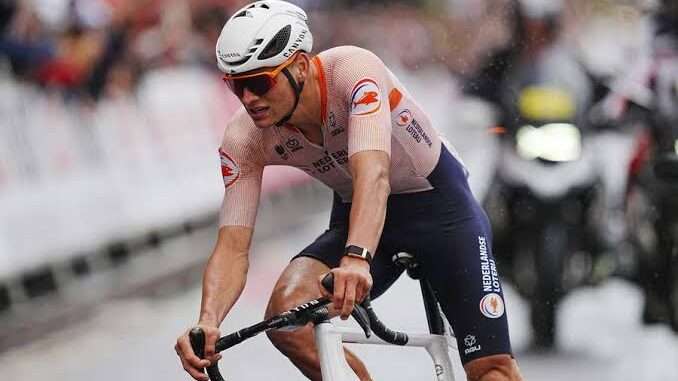
In the thrilling, grueling world of professional cycling, few names resonate as powerfully as Mathieu van der Poel. With a palmarès that spans cyclocross, road, and mountain biking, the Dutch sensation has redefined what it means to be a versatile cyclist. However, his overwhelming dominance has also cast a long shadow over his peers—particularly other top cyclocrossers attempting to make a mark on the road. Rising Belgian star Thibau Nys is one of them, and he’s beginning to feel the weight of unrealistic expectations fueled by the brilliance of his rival.
This spring’s Classics campaign offered a vivid reflection of this growing sentiment. While Van der Poel was breaking barriers and stealing headlines with jaw-dropping victories and trademark aggression, Nys was steadily carving out a respectable trajectory of his own. Yet, even solid performances like his valiant sprint at Milano-Sanremo were largely underappreciated, lost in the glare of Van der Poel’s firepower.
The Cyclocross Legacy and Road Expectations
Cyclocross has long been considered a niche discipline—gritty, weather-beaten, and oftentimes relegated to the fringes of mainstream cycling. But over the last decade, it has gained renewed attention, thanks in no small part to the explosive success of riders like Van der Poel and Wout van Aert, who seamlessly transition from mud-covered fields to asphalt arenas with terrifying ease. Their success has raised the bar—and with it, the pressure—on every cyclocross rider aiming to make the jump to road racing.
Thibau Nys, son of cyclocross legend Sven Nys, entered the professional scene carrying a name already steeped in legacy. Though still young and developing, his talent is undeniable. This season marked a significant turning point: his first full foray into the WorldTour road scene, and he did not disappoint. From tenacious breakaways to strong finishes, Nys demonstrated that he belongs in the peloton. However, it’s the comparison to Van der Poel that continues to follow him like a persistent echo.
“It’s frustrating at times,” Nys admitted after his performance at Milano-Sanremo. “You put in all this work, grind through the suffering, and still people ask why you didn’t do what Mathieu did. But he’s a once-in-a-generation talent. Comparing everyone to him doesn’t do justice to the depth in the sport.”
Milano-Sanremo: A Moment to Remember
If there was a highlight of Nys’s spring campaign, it was undoubtedly his sprint at the tail end of Milano-Sanremo. The race, the longest one-day event on the calendar, is known for its brutal final kilometers and strategic complexity. Nys, riding in the heart of a surging peloton, found himself jostling with seasoned veterans and powerhouse sprinters on the famed Via Roma finish.
“I felt good that day,” he recalled. “I was able to hold my position, follow the right wheels, and go when it mattered. I didn’t win, but I proved to myself—and hopefully others—that I can compete at this level.”
That sprint didn’t net him a podium, but it offered something arguably more important: validation. In a race where many young riders falter under the weight of the moment, Nys stood his ground. It was a statement performance, even if it didn’t come with champagne and flowers.
The Van der Poel Effect: A Double-Edged Sword
Mathieu van der Poel’s success is as awe-inspiring as it is polarizing. His explosive wins at Tour of Flanders, Paris-Roubaix, and most recently at the World Championships have rewritten what fans and commentators expect from a rider transitioning from cyclocross to the road. But therein lies the problem. With every jaw-dropping ride, he inadvertently raises the ceiling for what’s considered “acceptable” among his peers.
“It’s almost like people forget how hard cycling is,” said a team director who has worked with both Nys and other cyclocross converts. “They see Mathieu win races from 50 kilometers out and think, ‘Why can’t the others do it?’ But that’s like asking every tennis player why they’re not Roger Federer. It’s just not a fair comparison.”
The issue isn’t Van der Poel’s success—it’s the unrealistic expectations it generates. For riders like Nys, the assumption becomes: if you’re good in cyclocross, you should automatically dominate on the road. But that’s not how cycling works. The nuances, tactics, and physical demands of road racing are a different beast altogether. And mastering them takes time.
Building a Career on His Own Terms
Despite the challenges, Nys remains upbeat. He’s focused on development, not headlines. His 2025 campaign is only just beginning, and there are already signs that he’s progressing. He’s been training harder, studying race strategies, and aligning closely with his team’s objectives. Unlike Van der Poel, who often races as a lone wolf capable of shaping races to his will, Nys is still learning to function within team dynamics—an essential skill for stage races and Classics alike.
“I’ve learned a lot this spring,” Nys said. “Not just physically, but mentally and tactically. It’s not about trying to become the next Mathieu. It’s about becoming the best version of myself.”
He’s also quick to highlight the camaraderie among the younger generation of Belgian cyclists. Riders like Arnaud De Lie, Lennert Van Eetvelt, and Cian Uijtdebroeks are helping to reshape Belgium’s future in road racing. Together, they’re pushing each other forward—sometimes literally, in breakaways and leadouts—and creating an environment where growth is prioritized over instant results.
Media Hype and Public Perception
The media narrative plays a huge role in shaping how riders are perceived. Van der Poel’s dominance makes for thrilling stories, but it also sets a near-impossible benchmark. The danger is that it may inadvertently discredit the achievements of other young, talented riders who are progressing at a more traditional pace.
“The media loves a spectacle,” noted one cycling journalist. “Van der Poel delivers that, no question. But in doing so, the quieter, more methodical stories often get overlooked. Thibau Nys’s development is one of those stories. He’s a rider who could easily evolve into a Classics contender over the next few years.”
Looking Ahead: What Comes Next?
For Nys, the immediate focus is on consistency and staying injury-free. He’ll continue to test himself in smaller stage races and selected Classics, aiming to build his endurance and sharpen his sprint. His long-term ambition? To win a Monument, but on his own timeline.
As for Van der Poel, his legacy is already cemented. He will continue to dazzle, disrupt, and inspire. But if the cycling world is to truly appreciate its depth, it must look beyond the towering giants and recognize the quiet revolutions happening further back in the pack.
“Mathieu is Mathieu,” Nys said with a smile. “But I’m Thibau. I’ve got my own path to carve. And I’m just getting started.”
In an era where greatness is instantly measured by how closely one can mimic the giants, Thibau Nys offers a refreshing reminder of the beauty in steady progress. While Mathieu van der Poel continues to soar, perhaps it’s time we stop comparing every cyclocrosser-turned-road-rider to a unicorn and instead, start celebrating their unique journeys.
Would you like a graphic timeline of Nys’s 2025 season results to complement this post?
Leave a Reply